


Article: Is Slow Fashion Worth The Price?

Is Slow Fashion Worth The Price?
Is Slow Fashion really worth the price?
This is one of the most common — and fair — questions people ask when they first step away from fast fashion.
At first glance, slow fashion does cost more on the price tag... But it reality it cost's the planet & people behind it a whole lot less than what fast-fashion does.
So let's dig a little deeper.... why does slow fashion cost more?
What are you actually paying for?
Slow fashion garment's are priced based on:
-
Ethical wages & working condition's for makers and artisans.
-
Small‑batch production (not mass manufacturing).
-
Higher quality natural fabrics (not cheap synthetics).
-
Thoughtful designs for timeless wear over trend driven.
- Designer based with originality.
When clothing is made quickly and cheaply, the true cost is often hidden — passed onto garment workers, the environment, or the lifespan of the piece itself.
One thing that also often gets overlooked in the slow vs fast fashion conversation is this:
Almost every piece of clothing in the world is made by human hands.
Even in fast fashion, garments aren’t magically produced by machines alone. Fabrics are cut, sewn, assembled, sewn with sewing machines, checked, and packed by people — usually working long hours, under intense pressure, for very low pay.
The difference isn’t whether clothing is made by hand — it’s the conditions under which those hands are working.
In fast fashion, speed and volume are prioritised. Workers are expected to produce hundreds of garments a day, often with little time for care, rest, or quality control. Mistakes aren’t a surprise — they’re a consequence of a system built on urgency.
Slow fashion takes a different approach.
Production is smaller, timelines are longer, and makers are given the space to work with intention. This allows for better craftsmanship, fairer wages, and garments that are finished with care — not rushed to meet a trend cycle.
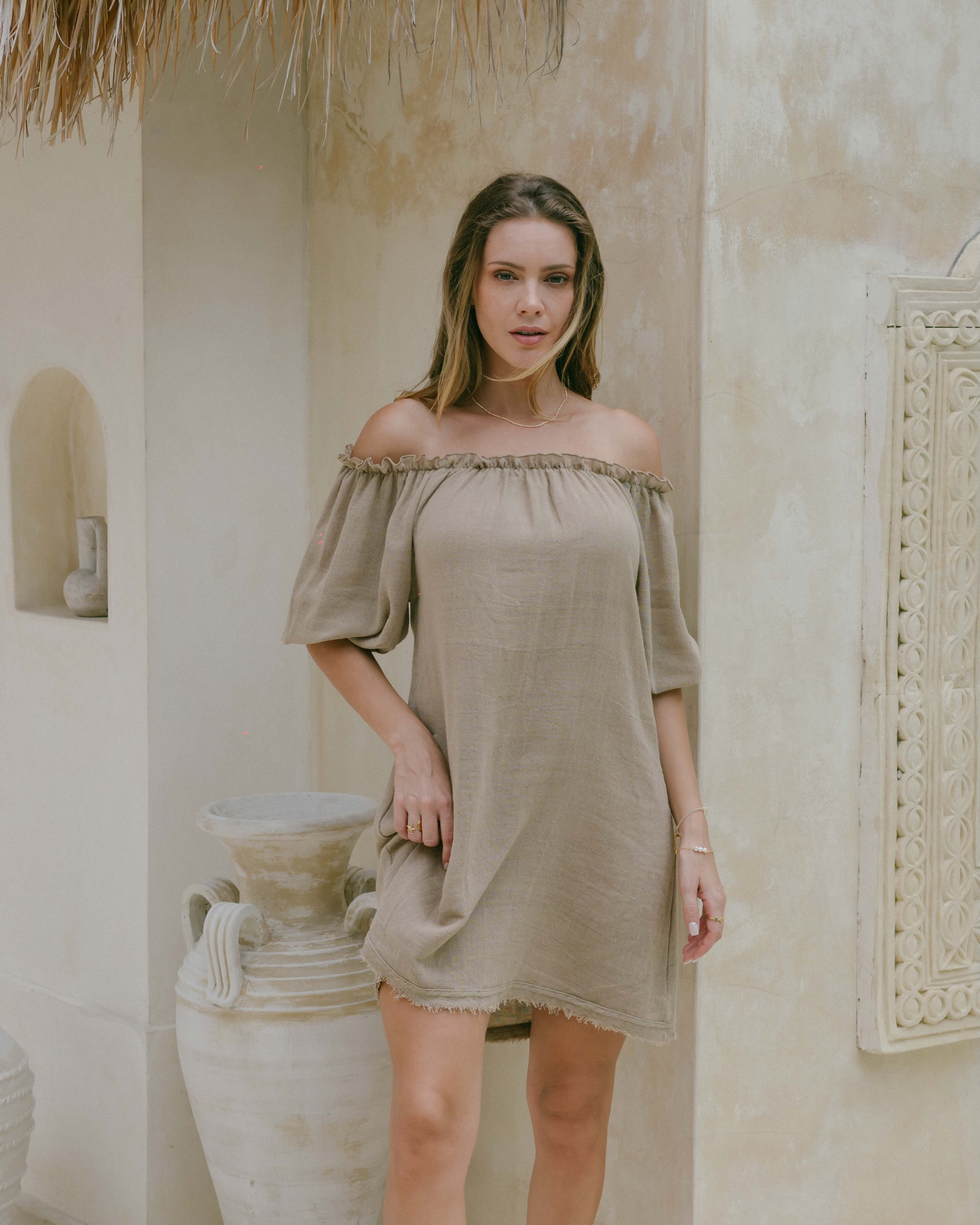
At Malia The Label, our pieces are made in small batches in collaboration with skilled makers in Bali. Each garment passes through multiple hands — from cutting to sewing to finishing — with time and attention given at every stage.
So when we talk about slow fashion costing more, we’re not paying for “handmade” as a buzzword. We’re paying for time, respect, and care — for the people making our clothes, and for the clothes themselves.

Cost per wear matter's more than price tag...
Hvae you ever thought about the cost per wear, instead of the actual price tag itself... This matter's more and we will tell you why!
For example a $40 fast-fashion top that was bought with a trend in mind and worn twice cost's more per wear than a $180 piece worn once a week for 2 years, or over 104 times in it's life span.
If you work out the math $40 divided by 2 = $20 per wear, compared to $180 divided by 104 = $1.70 per wear or less.
Slow fashion pieces are designed to:
-
Outlast trends
-
Be worn across seasons
-
Mix easily with the rest of your wardrobe
At Malia The Label, each design is created to become a go‑to piece — not something you forget about after one season.
The emotional value of buying less is better
There’s also something underrated about opening your wardrobe and loving everything inside it.
Slow fashion encourages intentional buying, less decision fatigue, and a calmer relationship with clothing — something that aligns closely with Malia’s meaning: calm & gentle waters.
So, is slow fashion worth the price? If you value longevity, comfort, ethical production, and timeless style — the answer is yes.



Leave a comment
This site is protected by hCaptcha and the hCaptcha Privacy Policy and Terms of Service apply.